Start with the work, not the address
A co-working membership looks like a change of scenery, but it is really a decision about the repeatable parts of your day: the focused stretch before lunch, the unexpected client call, the 4pm task that needs one more quiet hour. Before touring, write down what fills a typical week. Deep solo concentration, dependable meeting space or a desk between appointments will point you towards a hot desk, dedicated desk or day pass.
Choose for the days you actually have, not the glamorous workday you hope will materialise. A central address helps only if it sits on your real route. A space close to your usual MRT line or bus connection is often the one you will actually use.
Test the desk, not just the lobby
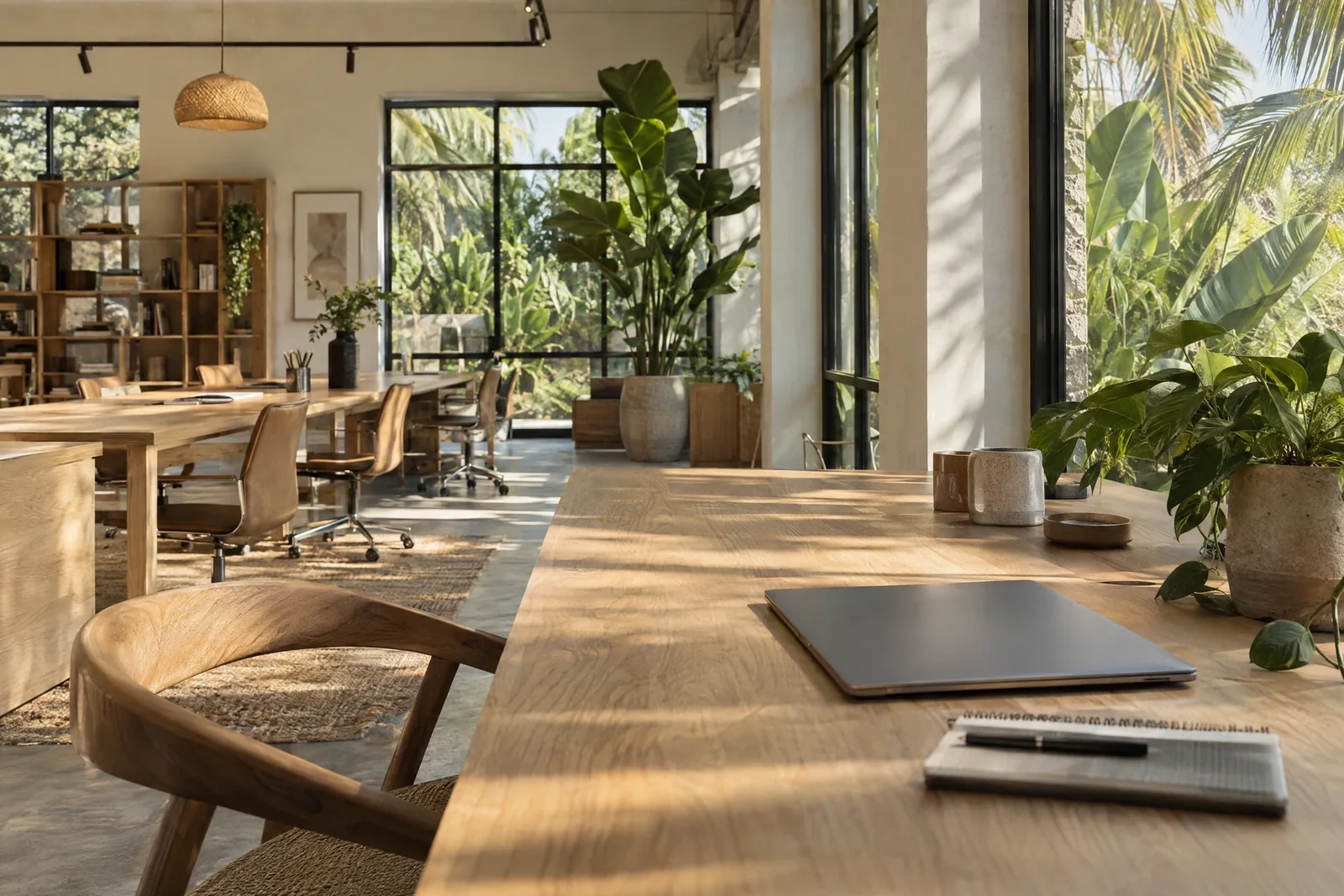
Common areas photograph well. Your attention will spend the day at a desk. Sit at the kind of seat your membership allows, not the showroom chair. Is there room for a laptop and notebook? Can you rest your feet comfortably? Does the chair adjust easily, without leaving you perched at the desk edge?
Bring your laptop to the tour if possible. The UK Health and Safety Executive suggests a screen with its top at eye level and roughly an arm’s length away, with the keyboard just below elbow height. For prolonged laptop work, it also recommends a separate keyboard and mouse. See its display-screen setup guidance. Look for a space where your own equipment can make a workable setup.
Read the light and noise at working speed
Visit at the hour you expect to work. Morning sun can turn a window desk into screen glare, while a quiet mid-afternoon tour may conceal the lunchtime crush. Open your laptop and notice whether you are squinting or constantly shifting position. If visual work is central, ask whether you can move seats when the light changes.
Then listen beyond the playlist. A phone call, coffee machine and team huddle create different kinds of sound. Try a few minutes of the task you most need to protect, even if that means quietly reading a dense email before deciding.
Make a plan for calls and common areas
Phone booths and meeting rooms are not interchangeable. Ask how many booths there are, whether they can be booked, how long you may use them and what happens when they are full. Test mobile signal and Wi-Fi where you would take a confidential or time-sensitive call. If calls are central to your work, make sure the booking rules match your calendar.
Notice the social boundary of the open floor too. Can you step out for a conversation? Is guest access clear? A friendly space should still let you choose when to be part of the room.
Count the commute and the food nearby
A good desk should not turn lunch into a logistical project. Walk the block, not just the lobby entrance. Look for the practical choices you would welcome on a wet day or between meetings: a hawker centre or food court, a casual café, a place to refill water, and a shop for the forgotten charger. They need not be fashionable; they need to be easy.
Time the final walk from station or parking, including lifts and crossings. Think about the trip home after an evening event. A space that removes daily friction can be better value than a cheaper desk you keep finding reasons not to visit.
Use a trial visit like a normal workday
A tour shows intention. A trial day shows the operating rhythm. Schedule yours for a weekday that resembles your routine, arrive early enough to see the room fill, and stay long enough to meet the first small inconvenience.
Keep this short checklist in your notes:
- Does the seat, light and noise level suit my core task?
- Can I take one call without a booking, privacy or sound problem?
- Are the journey and lunch realistic on a rushed day?
- Would I work here for the length of my usual day?
Build some movement into the trial too. Singapore’s Ministry of Manpower advises avoiding continuous prolonged sitting or standing; choose a space where you can step away, change posture or take a short walk without feeling out of place. Read the Ministry’s guidance.
Read the fees and boundaries before you commit
Ask for the full monthly figure, then what sits outside it: taxes, deposits, printing, meeting-room credits, guest passes, lockers, after-hours access and notice periods. If a promotional rate ends, write down the ordinary rate beside it. A low headline price matters only when the working conditions you need are included.
Finally, read the house rules as a picture of the day you are buying. Are calls welcome at desks? Can you bring food in? Is the membership tied to one location? Clear boundaries are what make a shared workplace predictable enough to rely on. When a space works for your schedule and budget, it has done the important thing: made it easier to begin.